Town Character Matters
You can tell within five minutes of arriving whether a town has character. It is in the storefronts that look like they belong there instead of anywhere. It is in the way the buildings sit on the street, some leaning slightly, none of them matching but all of them making sense together. It is in the coffee shop that smells like actual baking, not a franchise manual. Character is the thing that makes you slow down and look around instead of driving straight through.
Every small town in Ontario once had it. Many still do. But character is not permanent. It can be eroded by indifference, by development that prioritizes efficiency over identity, and by the slow disappearance of the people and businesses that gave a place its particular flavour.
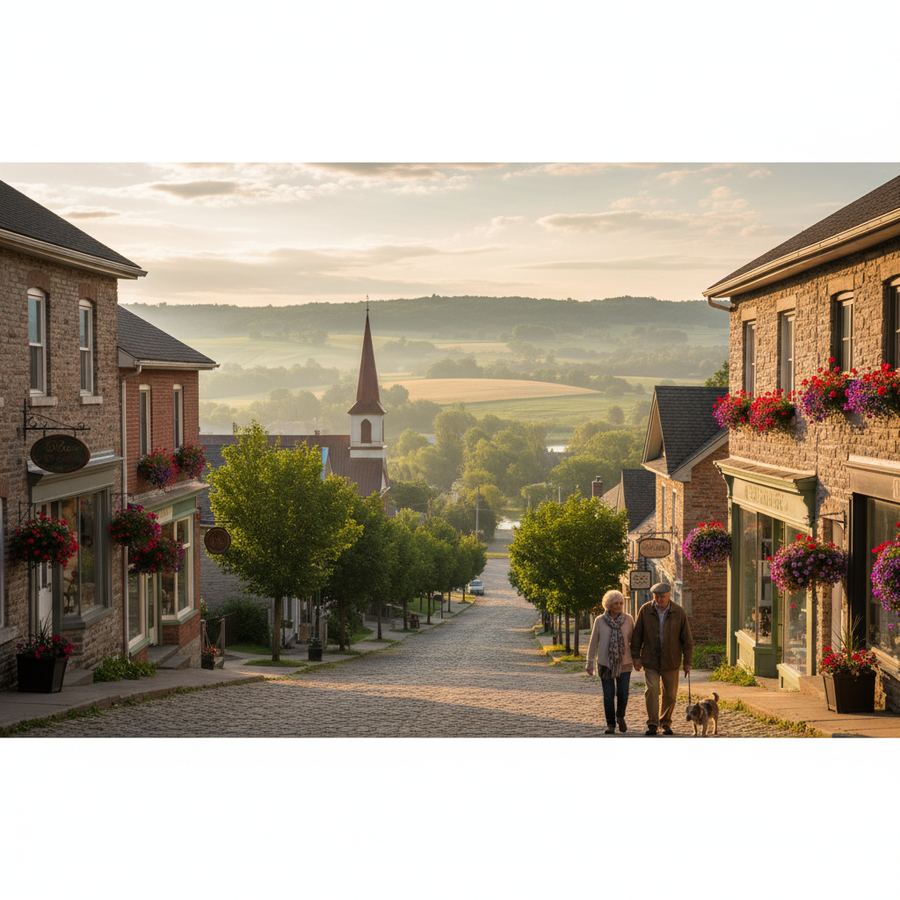
No two storefronts the same. That is character.
What Makes a Town Feel Like Itself
Character is hard to define in the abstract, but easy to recognize in the specific. It is the building materials. The limestone of Eastern Ontario, the red brick of the western towns, the clapboard of the lake communities. It is the width of the main street and whether there are trees along it. It is the details that accumulate over decades: the hand-painted sign above the barbershop, the mural on the side of the feed store, the park bench donated by someone whose grandchildren still live in town.
It is also the businesses. A town's character is deeply connected to the shops, restaurants, and services that line its main street. When those are locally owned and individually run, each one reflects the personality of its owner and the needs of its community. When they are replaced by chains or left vacant, something measurable is lost. The streetscape may look similar, but the feeling changes.
Prince Edward County is a useful example of character maintained and, in some cases, thoughtfully evolved. The County's towns have changed significantly over the past two decades, with wineries, galleries, and restaurants bringing new energy and new residents. But the underlying character, the quiet pace, the agricultural landscape, the distinct personality of each village, has largely held. This is not accidental. It is the result of choices made by residents, business owners, and local government.
How Character Gets Lost
The erosion usually happens gradually. A heritage building is demolished to make room for a parking lot. A family-owned shop closes and is replaced by a dollar store. A new subdivision goes up on the edge of town with houses that could be in any suburb in the country. Individually, none of these changes seems catastrophic. Collectively, they transform a town with a distinct identity into a place that could be anywhere.
Highway bypass development is one of the more visible culprits. When a town's commercial life migrates from the main street to a strip of chain stores along the highway, the centre hollows out. The buildings remain, but the activity moves. What was once the heart of the community becomes a thoroughfare people pass through on their way to somewhere else.
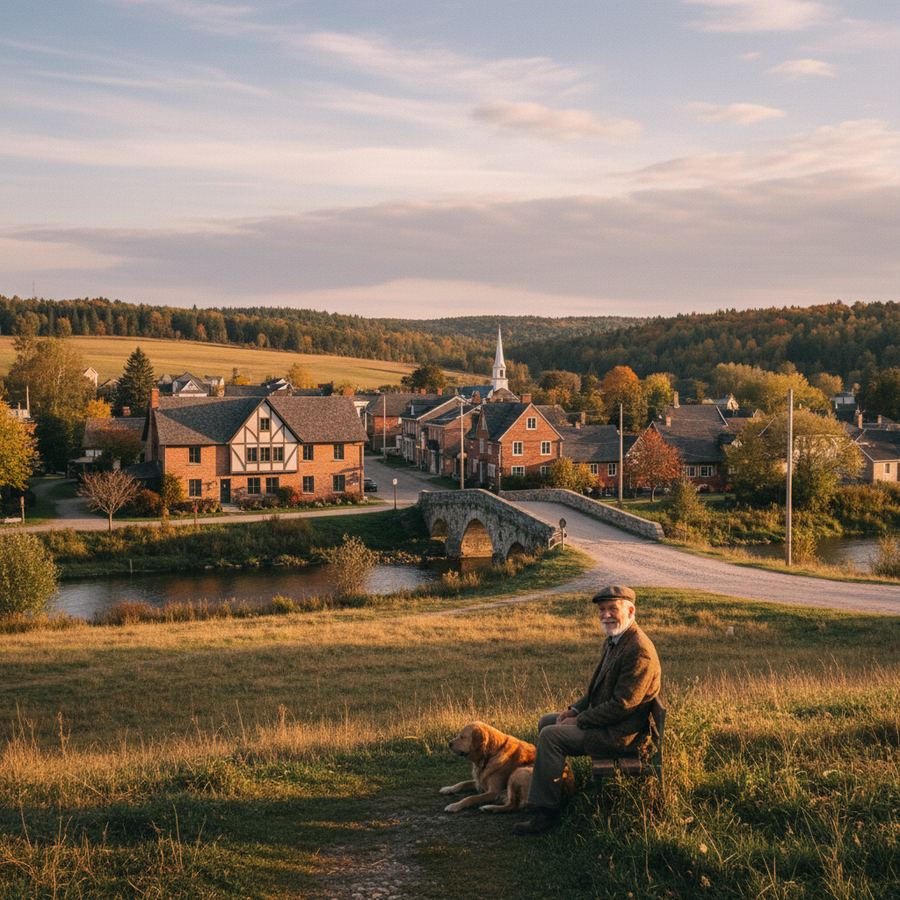
An empty storefront is not just a vacancy. It is a piece of the town's story going quiet.
Tourism, paradoxically, can both preserve and threaten character. A town that attracts visitors has economic incentive to maintain its charm. But if the tourism becomes the primary identity, the town can hollow out in a different way. Shops that once served residents start serving visitors exclusively. Housing becomes vacation rentals. The people who gave the place its character can no longer afford to live there.
The People Who Hold It Together
Behind every town that has kept its character, there are specific people. The couple who bought the old general store and turned it into a bookshop. The family that kept the diner open through years that did not make financial sense. The council member who fought to designate the main street as a heritage district. The artist who moved to town and opened a studio in the empty storefront nobody wanted.
These people are not celebrated enough. They are doing the unglamorous work of maintaining a place's identity against forces that would prefer uniformity. When you support a local business, you are supporting that work. When you choose a town with character for your weekend destination, you are voting with your visit for the kind of place you want to exist.
Why It Matters to Visitors
If you have ever driven through a stretch of Ontario where every town has the same gas station, the same fast-food restaurants, and the same big-box store at the edge of town, you know what the absence of character feels like. It is not offensive. It is just forgettable. You could not describe any of those towns to someone else because there is nothing to describe.
Contrast that with a town that has held onto itself. Stayner, with its compact main street and its particular mix of old and new. Shelburne, with its connection to fiddle music and its quietly proud identity. These places are memorable because they are themselves and nothing else. They have not been smoothed into interchangeability.
For travellers, this matters because character is the thing that makes a visit worthwhile. You do not drive two hours to walk down a street that looks like home. You drive two hours to walk down a street that looks like nowhere else. The slow travel approach depends entirely on there being places worth slowing down for.
Preservation Without Pretension
The best examples of character preservation are not self-conscious about it. They do not have heritage plaques on every building or themed storefronts designed to evoke a bygone era. They simply continue to be what they have been, adapting to new realities without abandoning old identities.
This requires a balance. A town cannot freeze itself in amber and remain a living community. New businesses, new residents, and new ideas are essential. The question is whether those additions complement the existing character or replace it. A craft brewery in a converted mill strengthens a town's identity. A generic strip mall on the outskirts weakens it.
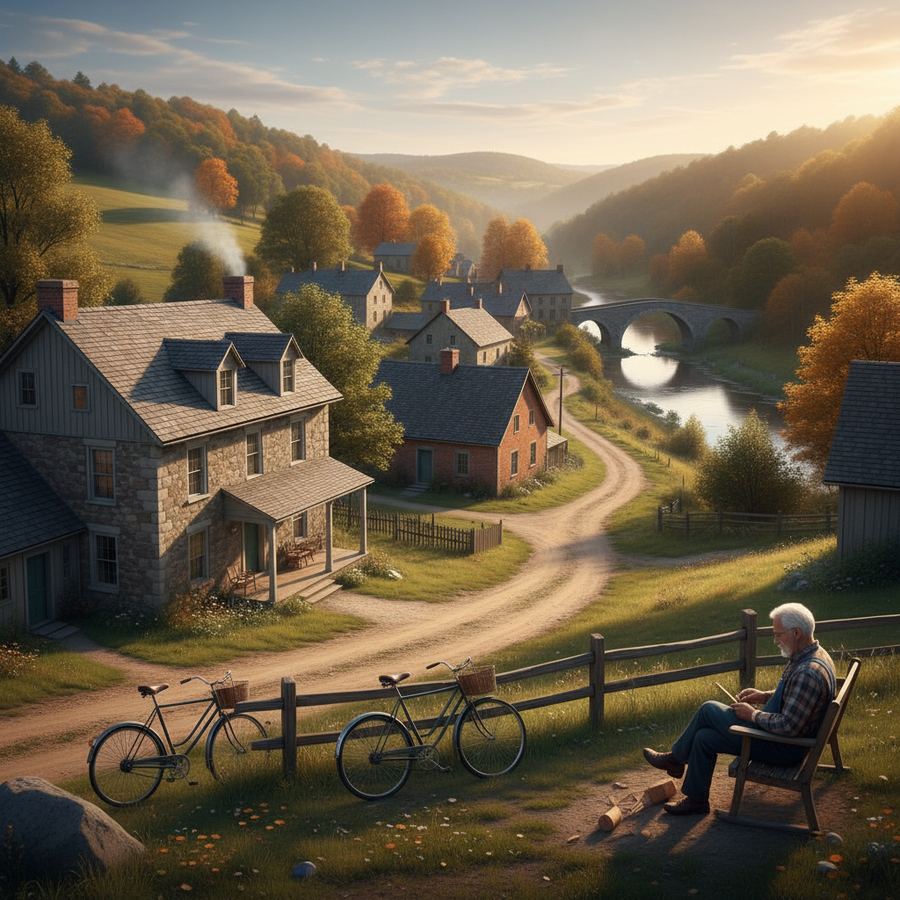
The details are what make a place specific instead of generic.
Residents of small towns already know this. They feel the loss when a landmark business closes. They notice when a building is torn down. They understand, intuitively, that the character of their town is not a marketing strategy. It is their home.
For the rest of us, passing through or considering a move, the lesson is simpler: pay attention to what makes a place feel like itself, and support it while it still exists. The Ontario Heritage Trust does important work in preserving the built environment, but character is preserved daily by the people who choose to live, work, and shop in towns that have it. That choice is the most powerful form of preservation there is.