Why Local Feels Better
There is a jar of honey on our kitchen counter that came from a farm about eight kilometres away. It tastes like honey. It does not taste objectively better than the honey you would find at a grocery store. But it feels different to use it. We know the beekeeper. We have seen the hives. The jar is refillable. And when we spread it on toast in the morning, there is a small, quiet satisfaction that has nothing to do with the product itself and everything to do with the connection it represents.
This is not a lecture about buying local. Nobody needs another one of those. It is more of an observation about what happens when the things you consume have a story you can actually trace, and why that matters more than we tend to admit.
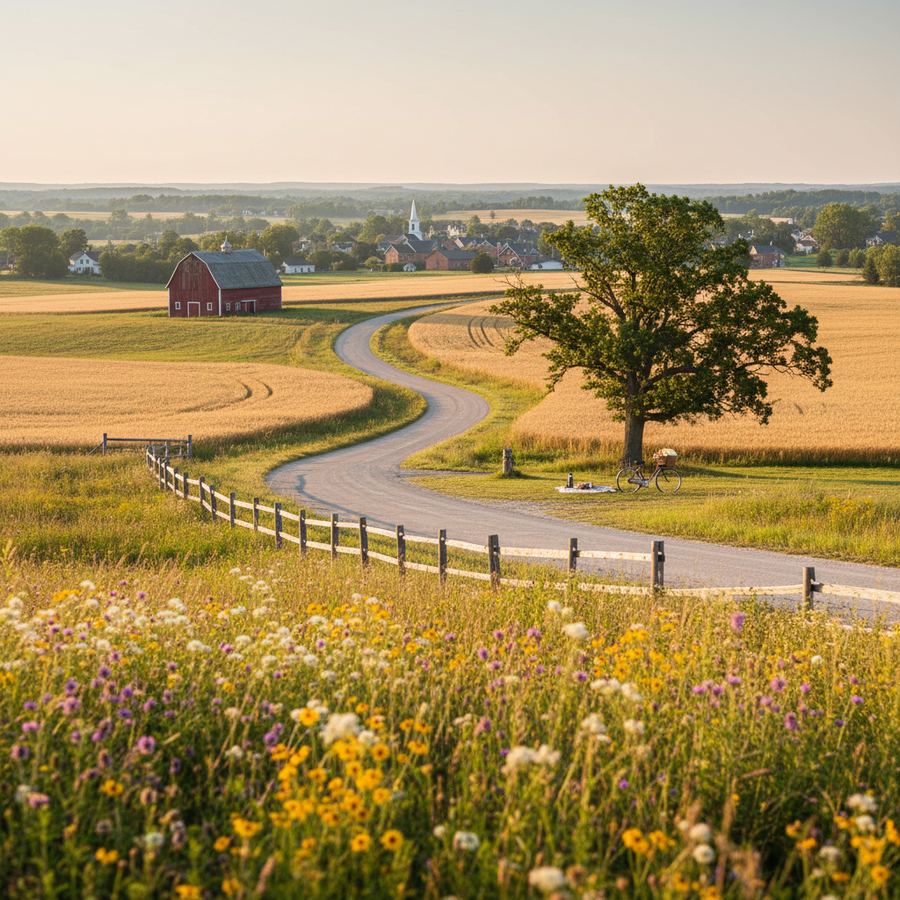
The farm stand down the road. No branding, no marketing, no middleman.
The Proximity Effect
Something shifts when you can see where your food comes from. When the eggs in your fridge were laid by chickens you have driven past. When the bread on your table was baked that morning in a shop you can walk to. When the person who grew your tomatoes also coaches your kid's soccer team. The transaction stops being purely economic and becomes something else. A thread in a web of relationships that holds a community together.
This is easier to experience in a small town, where the distance between producer and consumer is measured in minutes rather than supply chains. But it is not exclusive to small towns. Farmers markets, community-supported agriculture programs, and local food co-ops exist in cities too. The difference is that in a small town, buying local is often the default rather than the deliberate choice. The seasonal markets and farm stands here are not novelty shopping. They are the infrastructure.
Beyond Food
The local feeling extends well past the kitchen. There is a hardware store in our town that has been run by the same family for decades. They know what you need before you finish describing the problem. They stock the specific screws that fit the specific window frames that most of the houses in town were built with. This kind of knowledge does not exist at a chain store, and it saves you more time and frustration than you would expect.
The same principle applies to services. The mechanic who knows your car. The hairdresser who remembers how you like it. The accountant who understands the particular financial landscape of the area. These relationships take time to build, but once they exist, they make daily life smoother and more human.
There is also the matter of what your money does after you spend it. When you buy from a local business, a larger share of that money stays in the community. It pays local wages, funds local sponsorships, supports local families. This is not sentimental thinking. It is well-documented economics. A dollar spent locally circulates differently than a dollar spent at a national chain or on an online marketplace.
A store where someone knows every aisle because they stocked every aisle.
The Imperfections
It would be dishonest to pretend that local is always better in every measurable way. Sometimes it is not. The local restaurant might not be as polished as the city equivalent. The selection at the independent shop is smaller. The hours are less convenient. There are things you simply cannot get locally, and ordering online is not a moral failing.
The point is not perfection. It is participation. When you choose the local option where it exists, you are investing in the kind of place you want to live. You are saying, with your wallet, that this bakery matters. That this bookshop matters. That this town's ability to sustain its own commercial life matters. The character of a town is built on exactly these choices, made by enough people often enough.
What It Feels Like
The feeling is hard to name precisely. It is not pride, exactly, though it has an element of that. It is not virtue, though people sometimes mistake it for that. It is closer to belonging. When the things that sustain your daily life come from the place where you live, you are woven into that place more tightly. You have a stake in it. You notice when the bakery is closed for a week and worry about the owner. You celebrate when the farm stand has a good summer. The town's fortunes and your own are linked in a way that is tangible and real.
Visitors feel it too, even on a short trip. Eating at the place the locals eat, shopping at the spots that have been around for years, picking up something from a maker whose workshop is in the next town over. These small choices transform a visit from tourism into something closer to participation. You leave feeling like you were part of the place for a day, not just passing through it.
Starting Where You Are
You do not need to move to a small town to experience this, though it helps. You can start where you are. Find the closest farmers market and go every week. Learn the name of one shopkeeper. Buy your coffee from the independent cafe instead of the chain. Cook one meal a week with ingredients you bought directly from the people who produced them.
Commerce that includes a conversation and a handshake.
These are small acts. They do not require ideology or sacrifice. They require only a slight redirection of habits you already have. And the return on that redirection, the feeling of being connected to the place where you live through the things you eat and buy and use, is genuine and lasting.
The honey on our counter is almost empty. We will drive out to the farm next week and get it refilled. We will probably stay for a few minutes and talk about the season. Then we will drive home through the countryside with a full jar and the particular contentment that comes from a life lived at a pace where these small things are not small at all.