Shelburne: Where the Highlands Meet the Farmland
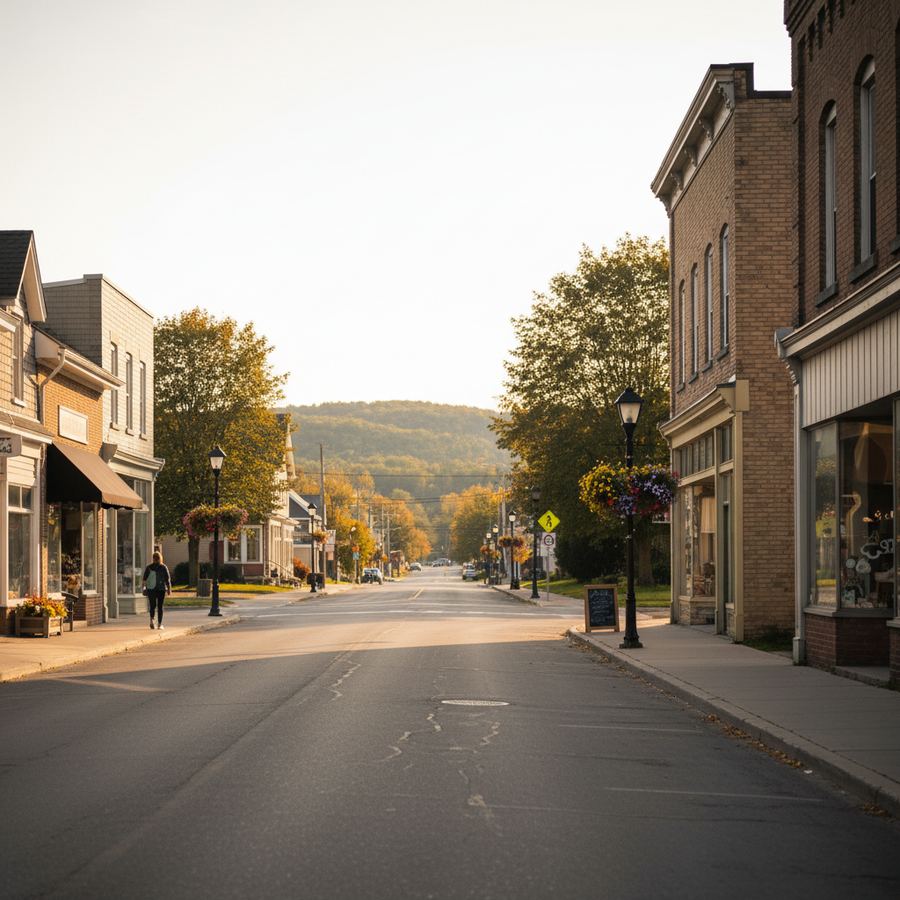
Shelburne sits at a crossroads in more than one sense. Geographically, it is perched near the southern edge of the Dufferin Highlands, where the terrain begins to lift and roll on its way toward the escarpment. Culturally, it is a town that carries its agricultural and musical heritage proudly while absorbing the changes that come with being within commuting distance of the Greater Toronto Area. It is a town in motion, but it moves at a pace that still leaves room for a proper conversation on the sidewalk.
The drive from Toronto is about an hour and a half, heading northwest through Brampton and Orangeville before the landscape opens up into the broad, gentle terrain of Dufferin County. Shelburne appears almost modestly, a collection of buildings gathered along Highway 10 that does not immediately announce itself as a destination. But spend a few hours here and you will understand why the people who live in Shelburne tend to speak about it with a quiet, specific pride.
The Fiddle Capital
Shelburne's most distinctive claim to fame is its connection to fiddle music. The Canadian Open Old Time Fiddle Championship has been held here since 1951, making it one of the longest-running fiddle competitions in the country. Every August, fiddlers from across Canada converge on the town, and for a few days the streets fill with the sound of reels, jigs, and waltzes played by musicians ranging from children to veterans who have been competing for decades.
The fiddle championship is not a staged tourist event. It is a genuine cultural tradition that the town has maintained with care and dedication for more than seventy years. Even outside of the competition, the musical heritage surfaces in unexpected places: a jam session at a local pub, a fiddle painted on a mural downtown, the way people talk about rhythm and community in the same breath. It gives Shelburne an identity that no amount of economic development could manufacture.
The Town Itself
Shelburne's downtown is compact and walkable, centred on a main street that retains much of its heritage architecture. The buildings are a mix of red and yellow brick, mostly two or three stories, with storefronts that house a range of businesses. There are restaurants, a few shops, a library, and the usual services that keep a town of this size functioning. It is not polished in the way that some Ontario towns have been polished for visitors, and that is part of what makes it feel real.
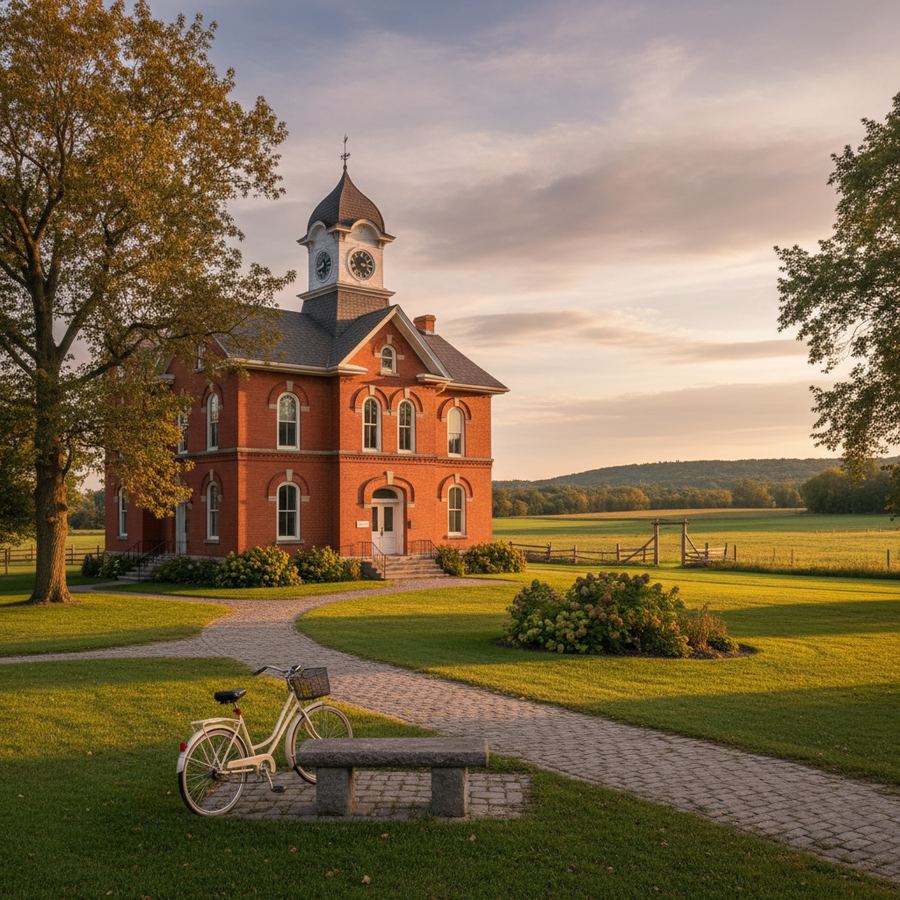
The town has been growing steadily. New residential developments have appeared on the edges, and the population has increased as people look for more affordable alternatives to the Greater Toronto Area. This growth brings challenges, as it does everywhere, but Shelburne has managed so far to absorb it without losing the core of what it is. The main street still feels like a main street rather than a throughway, and the community events that anchor the social calendar continue to draw strong participation.
For visitors, the best approach is simply to walk. Park on or near the main street, explore what is there, and then expand outward. The residential streets are pleasant and well-treed, and the surrounding area opens quickly into farmland and rolling hills that make for excellent drives in any season.
The Land Around
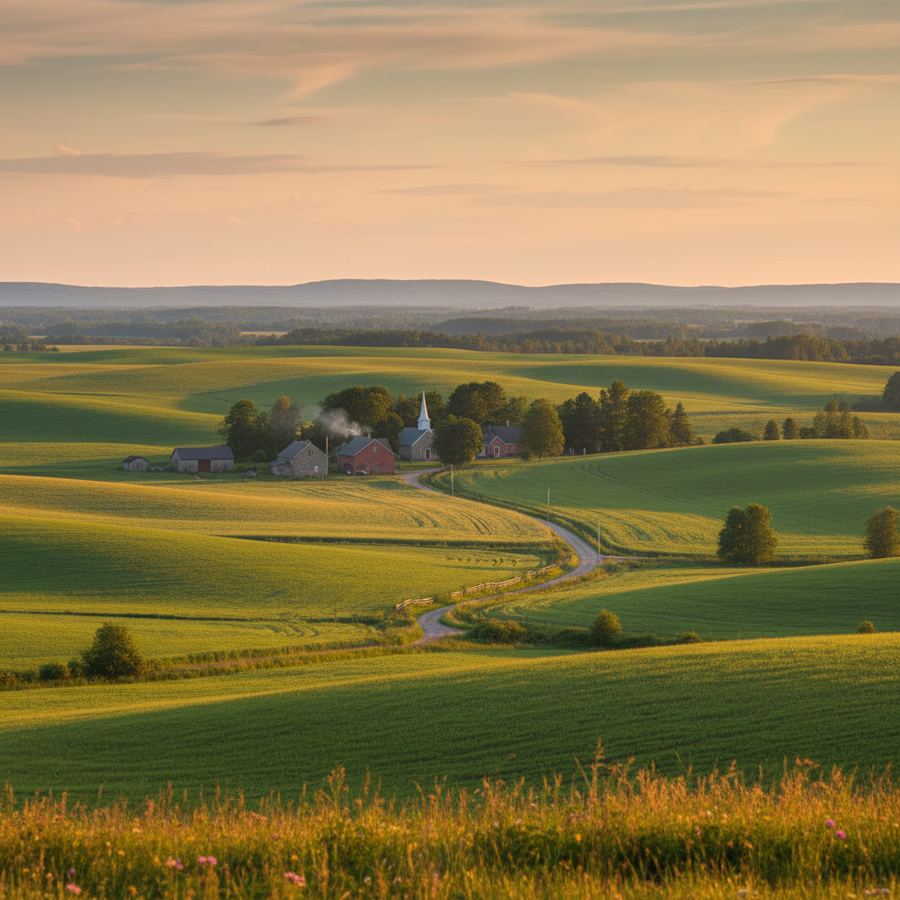
The Dufferin Highlands are among the most underappreciated landscapes in southern Ontario. The terrain here is higher and hillier than most people expect, with views that stretch across patchwork fields to distant tree lines and, on clear days, to the horizon beyond. The back roads between Shelburne and Dundalk, or east toward Mansfield and the Boyne Valley, are some of the finest driving routes in the region.
The Bruce Trail passes through Dufferin County to the west, and several access points are within a reasonable drive of Shelburne. The trail in this section runs through mature hardwood forest and along the edge of the Niagara Escarpment, offering hikes that range from easy afternoon walks to more challenging full-day outings. In autumn, when the maples and oaks turn, these trails are as beautiful as anything in Ontario.
Closer to town, the Shelburne area has a number of conservation areas and smaller trail systems that provide good walking without the need for a long drive. The Boyne River flows through the area, and its valley is particularly scenic in the fall months. If you enjoy slow travel through small towns and the countryside between them, this part of Dufferin County will hold your attention easily.
Food and Community
Shelburne's food scene is modest but honest. There are a handful of restaurants that serve good, straightforward meals, and a few cafes that have become gathering spots for locals. The farmers' market, when it runs, is a reflection of the agricultural community around the town, with produce, baked goods, and preserves from nearby farms. It is not a gourmet destination, but it is a place where the food connects directly to the land that produced it.
The broader Dufferin County area is home to a number of farms that sell directly to the public, and a drive through the countryside in late summer or autumn will turn up farm stands and seasonal markets along the roadsides. Apples are a particular strength of the region, and several orchards offer pick-your-own operations that are popular with families.
Community life in Shelburne revolves around events that bring people together throughout the year. Beyond the fiddle championship, there are fall fairs, holiday markets, and the kind of informal gatherings that happen naturally in a town where people know each other. For visitors, these events offer a window into a way of life that is becoming less common in Ontario's rapidly urbanizing landscape.
A Place Finding Its Balance
Shelburne is in the process of figuring out what it wants to be. The old agricultural identity is still strong, but the influx of new residents and the pressures of growth are reshaping the town's edges. This is a tension that many Ontario small towns are navigating, and Shelburne seems to be doing it with more awareness and intention than most.
What makes Shelburne worth visiting today is precisely this quality of being in between. It is not a frozen heritage village and it is not a sprawling commuter suburb. It is a working town with deep roots and an evolving present, set in a landscape that is among the most quietly beautiful in the province. If you are choosing a weekend destination and you value authenticity over polish, Shelburne deserves a place on your list.
The town is best paired with exploration of the surrounding county. Drive the back roads, stop at a farm stand, walk a stretch of the Bruce Trail, and return to Shelburne for a meal and a slower pace. It is the kind of place where local feels better than anything designed for tourists, because it was never designed for tourists at all.
For more on events and community happenings, the Town of Shelburne website provides current listings and visitor information.